




This content is locked. Please login or become a member.


Self-help tells us that we can fix anything with the right mindset, the right habits, the right 5-step plan. But what if that belief is doing more harm than good?
Historian Kate Bowler traces the deep roots of America’s obsession with self-making — from prosperity gospel theology to the endless productivity hacks of optimization culture. She explains how self-help promises control over things that are fundamentally fragile: our health, our time, our relationships, our lives.
The trouble is, we’re not machines to be upgraded. We’re human: breakable, dependent, and mortal. And any belief system that denies that will ultimately fail us.
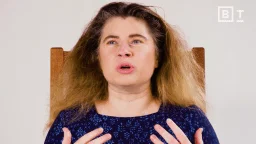
KATE BOWLER: Americans really perfected the genre of how to build a perfect life, and it started out with religious beliefs around the power of the mind. This is like the beginning of positive thinking. The belief was that the mind was a powerhouse. Whatever you put out will then come back to you.
The American belief in unlimited upward mobility that life is, if anything supposed to go up, really takes shape in the late 19th century. Fundamentally, this is a story about how culturally Americans adapted to city life. There is something about being very close to inequality, the very rich and the very poor blocks away from each other, that prompts an existential question: Why them? Why not me? Americans developed this genre in self-help about how to address that inequality with stories of self-making, and to explain away luck.
Self-help is one of the great American contributions to literature as a formulaic set of practices and principles that people can use to try to improve their lives. But what people don't often realize is that self-help isn't just applied wisdom. It's based on a set of philosophical and religious presuppositions about what humans ought to be able to do.
Why do you need luck if you have a set of steps and tools to minimize economic inequality, social inequality, and all the things that make us deeply unequal? Americans have always believed at heart that there is a solution and that they will find it.
Americans on their bedside table will be reading "Five Steps to a Better You," "How to Live Longer," "How to have a perfect family," "How to Improve Your Relationship." How-to is the core of an American story of self-making, and they are rabid consumers of the very story they hope will reassure them that at the end they will be the one to save themselves. Surprise, they're actually religious beliefs.
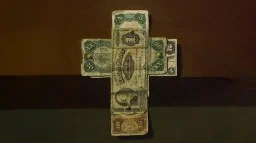
I wrote the first history of the belief that God wants to give you health, wealth, and happiness, which is called the Prosperity Gospel. It's a story about faith, not faith as hope or belief, but faith as a power to transform their thoughts into reality. Good thoughts that can make good things happen. Everything can always get better. To the person with the fortuitousness, with the determination and the positivity to survive and thrive.
The great enemy of self-making and endless growth and optimization is, of course, mortality. We spend half our life probably in some state of dependence, in being ushered into this world and then, often slowly and painfully, ushered out of it. Most of our cultural inability to accept suffering, but mostly frailty, hides our most human qualities: that we are breakable, that almost everything good about us is actually quite fragile, that things can be given and then taken away in an instant.
It takes a certain kind of existential posture to accept the world as it is: finite, beautiful, terrible. What I really want is not that people might become very sad, but to reintroduce emotional and spiritual range. Can we be the kind of people who understand the power of despair and yet also the great beauty, and sort of the infinite wisdom of each gorgeous thing we see?
If we would stop convincing ourselves that our job is to solve everyone's problem, we would have richer lives. We would be more patient with the incredible variations of seasons we're going to experience in our own lives, and I think we'd have deeper relationships and witness the height and depth that we will all face as we walk the hard road.