
For as long as people have been putting effort into anything, there’s been a push to get the most “bang” for your “buck.” More simply, it’s to get the greatest amount out by putting the least amount in. And if that’s what you’re after — that type of optimization — you might have heard of the term BrainMaxxing: the evolution of the mental part of what was once called lifehacking. Unfortunately for those of you who are truly seeing to grow your minds, that arena is full of what can only be rightfully called grift:
- detoxing your body from activities that give you the “hit” of a mental reward,
- giving your brain a regular schedule of structured activities that stimulate your cognitive efforts,
- supplements to “wake your brain up” optimally and “give your brain rest” at the appropriate time,
- and using digital tools to, as one dedicated website calls it, maximize your brain potential.
While the BrainMaxxing movement does have a large amount of extraneous, profiteering aspects surrounding it, the idea at the core of it is sound: you can, in fact, through sustained hard work, grow your mind and become better at any task and more proficient at any set of skills that you’re willing to practice at. In the era of AI, the notion of learning something for yourself is a quiet, internal act of rebellion against a world that seems to be flowing in the wrong direction. Here’s how the road less traveled can lead you to long-term success, while your peers’ shortcuts mortgage their long-term futures.

The trap is as follows: you need a short-term result, and because that’s the thing you value, you take the quickest and easiest path toward getting that result. If there’s an assignment due, you might:
- look up the answers to the assignment online,
- find someone else who’s done the assignment and take advantage of their hard work,
- outsource the assignment to someone else,
- or prompt an AI agent to complete the assignment for you.
Certainly, without having the expert-level knowledge needed to complete the assignment, whatever it may be, these methods are not only faster than attempting to figure out the solutions for yourself, they’re actually more likely to give you an accurate, correct set of solutions than you’d get if you simply did your best with the knowledge and resources you already possessed.
If this is for a school assignment, the consequence of eschewing those short-cuts likely means a lower grade on the assignment than your peers, which translates into a lower GPA and (what’s perceived as) making you a less competitive candidate for the next steps in life. If this is for a work assignment, the consequence could be getting reprimanded for either taking too long or producing work of sub-par quality. In the short-term, the advantage goes to the person who maximizes their path toward “getting the right answer,” as completing the assignment quickly and correctly is usually what gets externally rewarded.
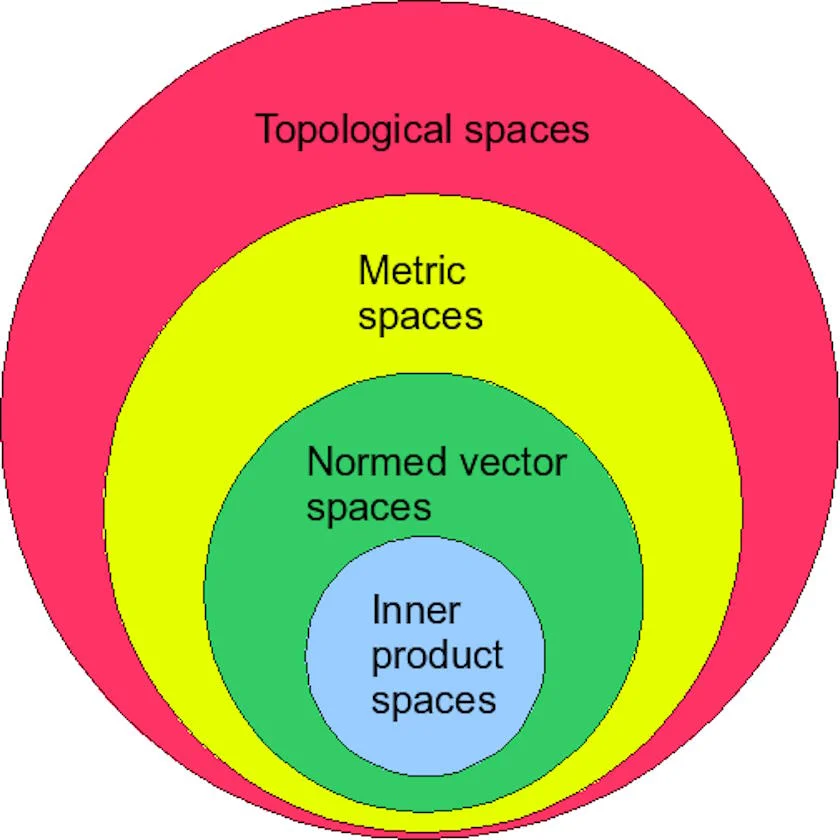

But then the next step arrives: the subsequent assignment. In most situations — including both work and school situations — the demands of what comes next builds upon the skills that the prior assignment was designed to teach you, and the problem-solving abilities that were intended to grow inside of you. If you took the short-cut earlier, you’re going to feel the pressure to take another, similar short-cut once again. And just like before, you’ll probably meet with some success.
- If the assignment is to translate something from a foreign language, there are plenty of tools and resources that can do it for you, including by recognizing and figuratively translating idioms.
- If the assignment is to solve a math problem, again plenty of tools and resources can find the solution, with many such resources even showing you the step-by-step pathway to derive the answer.
- If the assignment is to write an original composition on a particular topic, plenty of such compositions already exist, and many tools can generate essays that even a plagiarism-checker will deem to be original.
If you attempted to figure out the solution for yourself earlier, and attempt to figure it out on your own again this time, you might still struggle, and you might produce work that isn’t up to the standards of your peers who do take those short-cuts. It might seem like using your own mind is disincentivized.
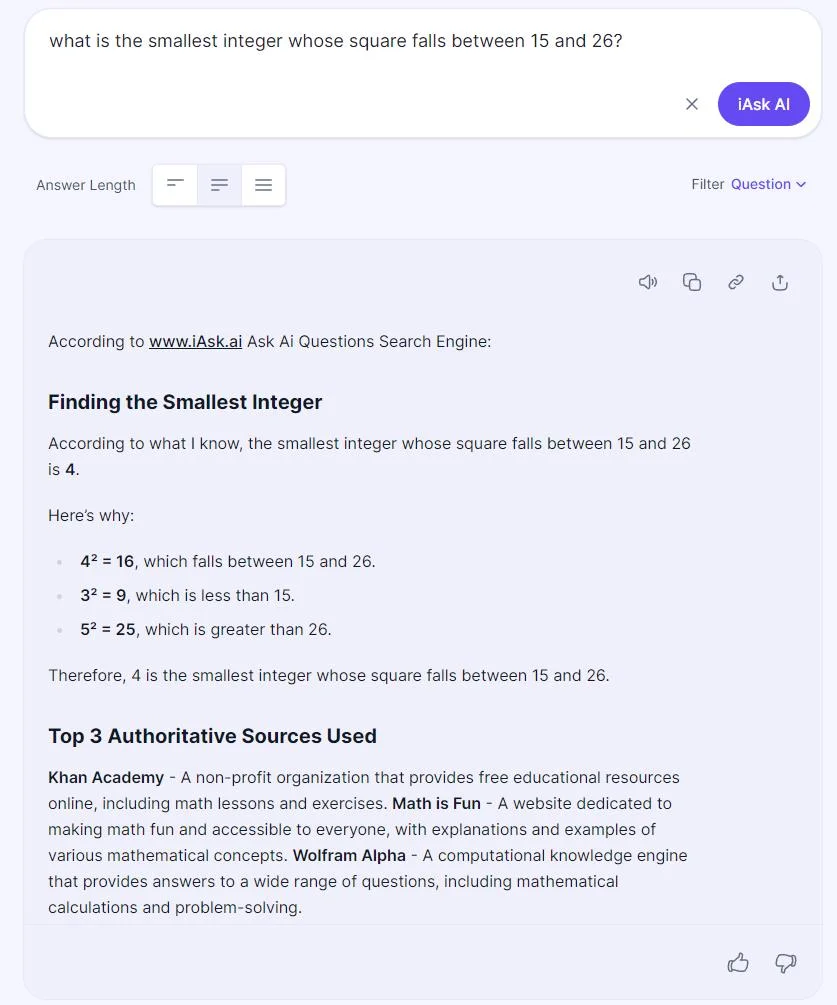
But this is the trap. The person who outsources their critical thinking and problem solving becomes reliant on whatever tools they can lean on to overcome each obstacle in their path. The more complex the problems become, the greater the demands on those external resources, while those resources themselves — due to the increasing specialization of the nature of the assignments — become less available, less comprehensive, and less sufficient overall.
Meanwhile, the person who’s been putting in the hard work — who’s been willing to struggle, persevere, study, all while slowly but steadily increasing their skill set — might still not be up to the more difficult assignments that they’re currently facing, but has now built up a solid foundation based on the earlier material. They know how to approach the problems they encounter, and have a number of tools at their disposal to pick it apart.
Going back to the problems encountered initially, the person who’s been putting in that hard work all along can now solve them skillfully and often easily, while the person who leaned on external resources will very likely still need to do so, not having developed the foundational skills that the hard worker, through their willingness to struggle and persevere, inevitably acquires for themselves.


The problem is the same as it’s always been: making the choices that undermine the construction of a sturdy foundation of knowledge, skills, and problem-solving abilities. You learn physics and math by setting up and solving problems. You learn a foreign language by learning the alphabet, the vocabulary, the grammar, and by practicing reading, writing, speaking, and listening. You become skilled at athletic and artistic endeavors by practicing them, with a coach or trainer or tutor to help you develop your fundamentals and to help you grow and progress to the next level. The goal isn’t to get the answer; the goal is to develop and expand that foundation of skill and knowledge and ability.
When people talk about “the education crisis” or “the workplace crisis” what they’re really talking about is that those who take short-cuts — through, for example, outsourcing the foundation-building struggle to AI chatbots — wind up cheating themselves out of that foundational knowledge. It’s the same sort of problem that people worried about when the calculator was invented: what about the student who never learns to add, subtract, multiply, or divide? How diminished will their opportunities for success be in the real world? What of the author who never learns to write, the computer programmer who never learns to code, or the artist who never learns to draw?

The short answer is this: the person who achieves any modicum of success in any profession or career, but who lacks the foundational skills and abilities that underpin that profession or career, will find themselves ill-prepared to meet the challenges they’re likely to face in the future. By contrast, the person who’s put in the hard work, and who has built themselves a solid foundation in the process, is the person who’s going to be better prepared to not only face whatever foreseeable challenges lie ahead of them, but to face whatever novel problems await them once they’ve graduated to the next steps that lie beyond their schooling, their apprenticeship, or their days as a junior person in their chosen field.
To put it more simply, you can choose to build that foundation for yourself, confident that the ultimate payoff will come later, or you can choose to get the maximum result with the least effort today, and cheat yourself out of the long-term reward of having grown your mind.
That’s the secret behind actually maximizing the potential of your brain: putting it to use in a way that grows it. It isn’t just the ability to have an idea that’s key — ideas are a dime-a-dozen — it’s the ability to discern a good idea from a bad one, and to know whether a good idea is original or whether it’s already been put forth previously. Beyond that, it’s the ability to develop an idea into a finished product, in whatever relevant arena the idea takes place in: what Edison referred to as the “99% perspiration” component of success.

It turns out that the recipe for growing your mind is actually simple, and only involves a very small selection of what the modern BrainMaxxing movement touts as necessary to success. All you need to do is:
- decide that you are serious about wanting to get good at something,
- start by learning the elementary fundamentals of that thing,
- practice them for a sufficient amount of time, every day, until you become very good at them,
- then move on to the next, more challenging steps that build upon those previous fundamentals,
- practice them every day, again for a sufficient amount of time, until you become skilled at those next steps,
- then continue to challenge yourself both conventionally and creatively at an even higher level in that endeavor,
- and continue iterating in exactly this fashion, over a long, sustained period of time.
Whether it’s a sport, an art, a language (including a programming language), mathematics, a science, music, or any other endeavor, the key to growing your brain is to devote the time and energy into struggling with the material and engaging with it directly. That is the secret: there is no shortcut to proficiency, you must put in the time and effort yourself to build those mental connections. Anything else will not lead to proficiency, the best it can do is lead to the illusion of proficiency: an illusion that will be exposed sooner or later, most often as soon as you do encounter someone with bona fide expertise.

You cannot succeed merely by “keeping a streak alive” or by practicing only at your current level over and over again. That might be sufficient to build a foundation at that current level, but it won’t help you progress beyond that at all. It’s important to rest, eat, and sleep well, but that’s important for any body and mind to maintain your overall health. And it’s important to mentally engage with what you’re doing, but that should go without saying: if you want to get good at something, you need to devote your attention to it. The more distracted you are — and yes, what’s often called “multitasking” is tantamount to not giving the endeavor your full, undivided effort — the less you’ll get out of it.
But that doesn’t mean you can’t enjoy the things that give you “dopamine hits,” like video games, junk food, or social media, even though the BrainMaxxing “movement” derides them. You simply shouldn’t count the time that you’re doing those things as time that you’re actually devoting to growing your mind. (We all need downtime, and these can all serve as a form of mental rest.) You don’t have to optimize your lifestyle by structuring your entire routine; you simply have to be consistent about the time and effort you put into learning what you value getting good at.
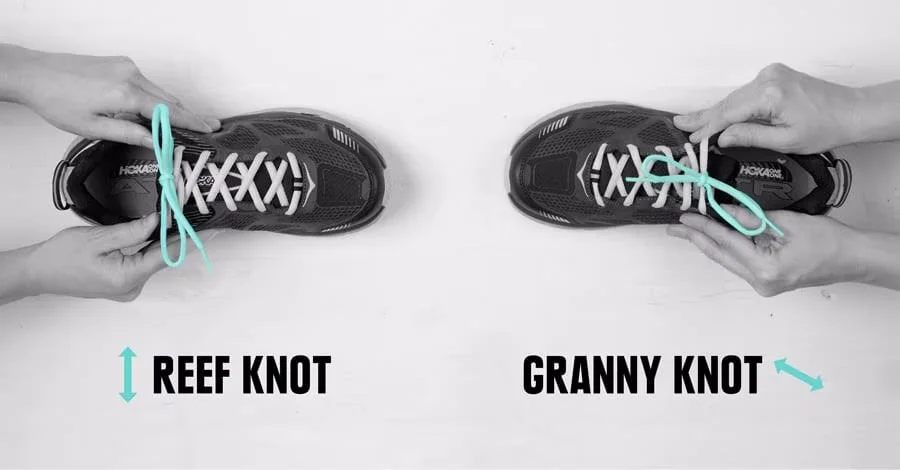
You can use tools if you’d like help, particularly if you’re someone who isn’t skilled at organizing your schedule or knowing how to study and review information, but no single tool is right for everyone. And it’s vital to understand that you aren’t rewiring your brain so that you prefer engaging deeply with difficult work and the acquisition of skills, even though that’s what people often state that the ultimate goal of BrainMaxxing is.
What you are attempting to do — and, for many of you, this will be your first time doing it — is to develop healthy and regular habits that lead to you putting in a large, sustained effort over long periods of time. Once something becomes habitual, it becomes easier to keep doing it, because that’s what you’ve trained yourself to do. That is not a lifehack or any special strategy: it is simply its own form of practice.
- If you want to get good at swimming, get in the water and swim.
- If you want to get good at painting, pick up a brush and start creating art.
- If you want to get good at playing the piano, sit down in front of your keyboard and start making music.
- And if you want to get good at physics, you’ll need to encounter problems that you work to set up and correctly solve.
The more you do it, the better you’ll get at it, particularly if you have external feedback from someone who’s more skilled at it than you and who can help you improve.

Credit: V. S. de Carvalho and H. Freire, Nucl. Phys. B, 2013
That’s the part of BrainMaxxing that’s real, and that actually works. In today’s world, it’s likely an approach that’s more uncommon than ever, as:
- in schools, good grades are rewarded over honest effort,
- in workplaces, junior-level positions are being eliminated in favor of AI agents,
- and even at the executive level, sycophancy and short-term gains are more often heavily rewarded than adherence to demonstrable truths and long-term sustainability over time.
But that’s the problem with chasing the wrong goals. If your goal is short-term success, you can often achieve it by mortgaging your long-term future. If your goal is long-term success, there is really no substitute for doing the necessary hard work.
That means that, when it comes to schooling, you should prioritize growing your mind over the “reward” of a good grade. When it comes to your career, you should prioritize skill development and the long-term growth of your capabilities over getting the fastest acceptable result. You should prioritize producing something of the maximum quality you can in the time you have to do it, over the commonly-sought alternative of a “minimum viable product.” Your life is not a sprint, and your mind is not a fuel tank to be emptied. Grow it. Nourish it. And do it scrupulously and sustainably. The reward of a skilled, capable mind is one that will stay with you as long as you live.
This article BrainMaxxing: the road less traveled in the age of AI is featured on Big Think.